Crawl Space Encapsulation Built for Northwest Arkansas Homes
Crawl space encapsulation is the process of sealing the dirt, walls, and vents of your crawl space behind a heavy 20-mil vapor barrier, closing off outside air, and controlling humidity with a dedicated dehumidifier. Done right, crawlspace encapsulation turns the wet, moldy, snake-friendly cavity under your house into a clean, dry space that protects your floors, your air, and your energy bill. Bentonville Crawl Space connects homeowners across Bentonville, Bella Vista, Rogers, and greater Benton County with crawl space encapsulation done to that standard — not a thin sheet of 6-mil plastic thrown over the dirt.
Northwest Arkansas is genuinely hard on crawl spaces, and it comes down to two facts about where we live. First, the weather: this part of the Ozarks gets well over 40 inches of rain in a typical year, much of it in violent spring storms, and our summers keep outdoor humidity high for months. A vented crawl space pulls that humid air straight under your floor, where it condenses on cool framing and duct work. Second, the ground itself: Benton County sits on the Boone Formation, the most widespread karst-prone limestone in the Ozark Plateaus. Karst ground is honeycombed with fractures, springs, and solution channels, which means groundwater moves under NWA homes in ways a builder cannot fully predict. Wet season after wet season, that water finds your crawl space.
How Crawl Space Encapsulation Works
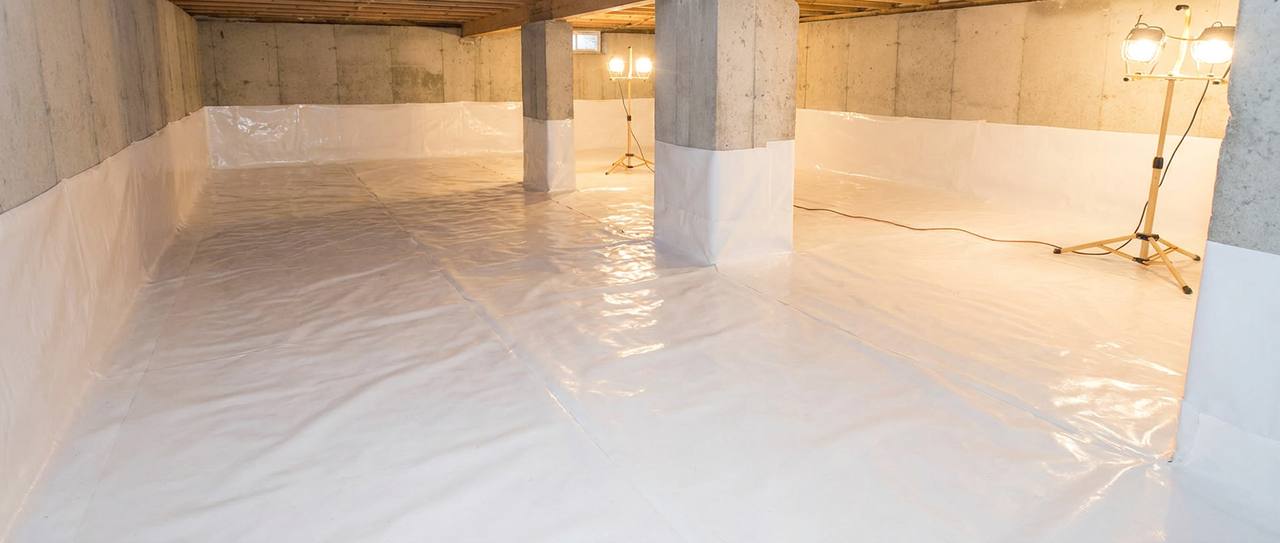
The short version: seal the ground, seal the walls, seal the vents, then dry the air. A full crawl space encapsulation in Bentonville typically includes:
- Cleanout and repairs first. Old fallen insulation, debris, and any standing water come out. Rotten wood, open plumbing leaks, and drainage problems get fixed before anything is sealed — encapsulating over a wet problem locks the problem in.
- A 20-mil reinforced vapor barrier. The liner is fitted across the entire floor and up the foundation walls, with seams overlapped and taped and the edges mechanically fastened and sealed. This is the difference between crawlspace encapsulation and the 6-mil plastic sheet many NWA homes already have — a true liner is tough enough to crawl on and completely isolates your home from the earth.
- Sealed vents and penetrations. Foundation vents, gaps at the rim, and utility penetrations are closed so humid Arkansas air stops cycling under your floor.
- A crawl space dehumidifier. A properly sized unit holds the space at a safe humidity level year-round and drains automatically. In our climate, this piece is not optional — sealing without drying is half a job.
Signs Your Bentonville Home Needs Crawl Space Encapsulation
Most homeowners never look under the house until something forces the issue. Here is what forces the issue:
- Musty smell in the living space. Air rises. In a typical home, a meaningful share of the air you breathe on the first floor came up from the crawl space — if it smells like a damp basement in your hallway, that is crawl space air.
- Cold floors in winter, sticky house in summer. Vented crawl spaces make your HVAC fight the outdoors year-round. Arkansas homes are especially exposed here: the state energy code is still based on the 2009 IECC, so most existing homes were built to insulation standards that are now more than fifteen years out of date.
- Sagging or bouncy floors. Long-term moisture softens joists and sills. That is a crawl space repair conversation, and it pairs naturally with encapsulation.
- Standing water after storms. Karst ground plus a big spring rain equals water under the house. That calls for drainage and a sump pump before the liner goes down.
- Mold on joists or fallen insulation. Mold needs moisture above roughly 60% relative humidity — which a vented NWA crawl space exceeds for much of the year. See our mold treatment page.
- Radon awareness. Benton County is EPA Radon Zone 2, with county averages of 2–4 pCi/L per the Arkansas Department of Health. Sealing the earth under your home with a heavy liner is also the groundwork for radon reduction if a test comes back elevated.
Why Homeowners Choose Encapsulation Over Quick Fixes
A roll of thin plastic from the hardware store costs a few hundred dollars and fails quietly: it tears, it shifts, moisture goes around it, and five years later the crawl space looks like it was never touched. Full crawl space encapsulation costs real money — typically $5,000 to $15,000 in Northwest Arkansas depending on size and condition — and solves the problem once. It protects wood framing from rot, keeps mold from getting established, takes the load off your HVAC, and turns the space into clean, dry storage. On resale, a sealed and documented crawl space answers the home inspector's single favorite place to find problems. Our cost guide breaks the numbers down honestly, including what makes a job land at the low or high end of the range.
And when a crawl space does not need the full treatment, the honest answer is a smaller one: sometimes a vapor barrier and sealed vents do the job, and sometimes a dehumidifier alone is the missing piece. The free inspection exists to tell you which house you have.