The Short Answer
Standing water in a crawl space is a plumbing-of-the-landscape problem, and it gets fixed at the source. Gutters and grading route surface water away; interior drains and a sump pump handle what the ground pushes up. In Benton County the ground itself is the wildcard: our karst limestone moves groundwater through fractures and channels that can surface under a house that stayed dry for twenty years. Water first, liner second — always.
Why Bentonville Crawl Spaces Take Water
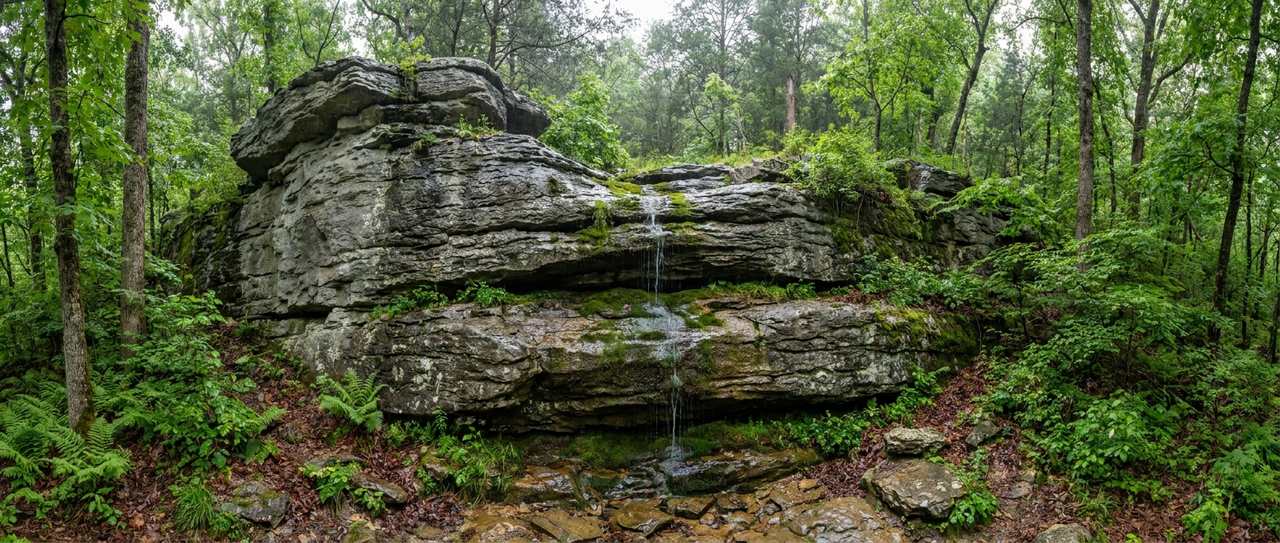
Northwest Arkansas gets well over 40 inches of rain in a typical year, concentrated in hard spring storms — the same season that produced the May 2024 tornado outbreak across Benton County. When that volume hits the Boone Formation, the fractured limestone under most of the county, it does not soak evenly like it would through deep soil; it runs through solution channels and surfaces where the rock says, not where your builder assumed. Add the hillside lots common in Bentonville and Bella Vista, where uphill neighbors drain toward your foundation, and a crawl space can take water even with clean gutters and decent grading.
The Fix, in Order
- Surface water first. Gutters, downspout extensions, and grading are the cheapest gallons you will ever move. Some "wet crawl space" calls end here.
- Interior drainage. A perimeter drain inside the crawl space collects water at the footing and routes it to a basin — the standard answer when water arrives through or under the foundation wall.
- A sump pump that will not quit. The basin pumps to daylight or an exterior discharge, with a check valve, and a battery backup where storm-season power outages are a concern — not a rare event in NWA spring weather.
- Then the liner. With water handled, encapsulation seals the dried space. A liner over standing water is a waterbed, and we will not install one.
Sump Pump Systems That Survive Storm Season
The pump is a commodity; the system around it is what fails or does not. A crawl space sump system built for NWA storm season includes:
- A real basin, set at the low point. Water in a crawl space finds the lowest spot — the basin has to already be there. On hillside lots the low corner is usually obvious; on flatter Bentonville lots it takes a level and some patience to find.
- A sealed lid. An open sump basin inside an encapsulated space is a humidifier plumbed into your dry zone. Sealed lids with cord grommets are standard on any system we would put a name on.
- A check valve and a smart discharge. The check valve stops pumped water from draining back; the discharge line runs to daylight, well away from the foundation, where it cannot recycle back into the ground beside the wall it just left — a genuine consideration on fractured limestone.
- Backup for the nights that matter. The storms that flood crawl spaces are the storms that drop power lines. A battery backup pump costs a fraction of one flooded-space cleanup, and spring outages here are not hypothetical.
Maintenance is honest and small: pour a bucket of water in the basin twice a year and confirm the pump runs, glance at the discharge outlet after big storms, replace the pump on an appliance schedule rather than after it fails. If your current setup is a pump sitting in an open hole under a torn sheet of plastic — a configuration we find under Benton County homes weekly — the free inspection will show you exactly what closing the gap costs, drainage through liner, itemized.