The Short Answer
Crawl space insulation only works when the crawl space is dry. Cold floors in winter and an HVAC that cannot keep up usually trace to a vented, humid crawl space where fiberglass batts have soaked, sagged, and fallen. The fix pairs the right insulation with moisture control — because in Northwest Arkansas, insulation installed into a damp crawl space is on a countdown from the day it goes in.
Why Arkansas Homes Are Behind on Insulation
Arkansas's statewide energy code remains based on the 2009 IECC — among the older baselines still in force anywhere in the country. In practice, most existing Benton County homes were insulated to standards now more than fifteen years old, and the crawl space is where the shortfall shows first: cold floors every January, sweating ducts every July, and utility bills that creep. Older Bella Vista and Rogers homes routinely show fallen batts resting on the ground, insulating nothing.
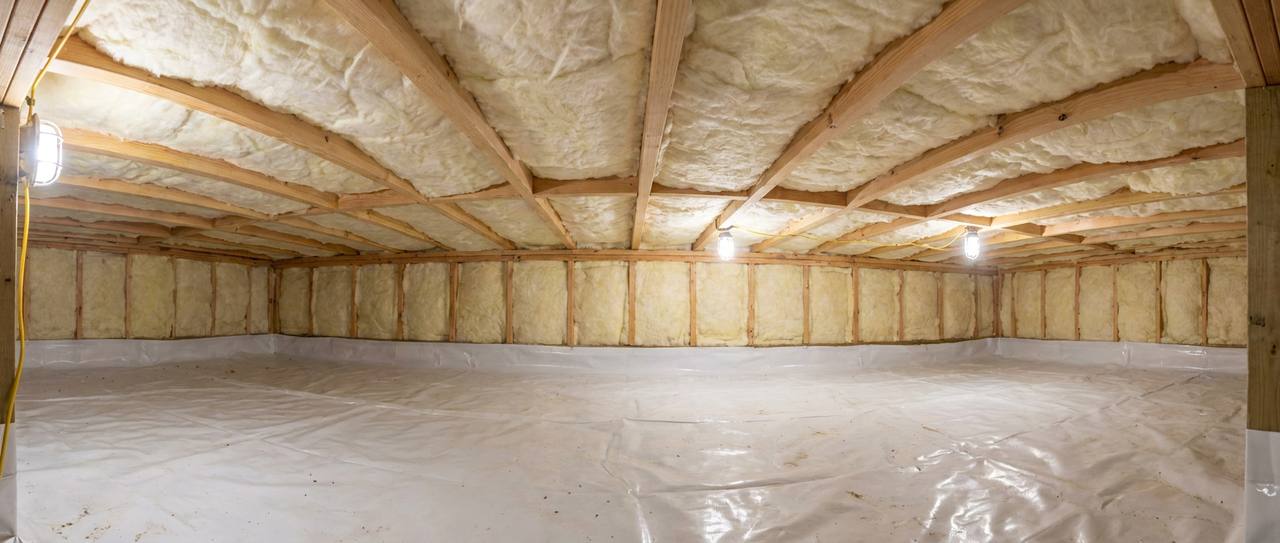
The Right Insulation for a Bentonville Crawl Space
- In a sealed (encapsulated) crawl space: insulate the walls, not the floor above. Rigid foam board on foundation walls brings the crawl space into the home's thermal envelope — the modern approach that pairs with encapsulation.
- In a vented crawl space that will stay vented: properly supported batts or rigid insulation under the floor, installed dry and protected by a real vapor barrier below.
- What we do not sell: new batts stapled into a humid crawl space. That is billing you twice for gravity's work.
Insulation Is Half the Story — Air Sealing and Ducts Are the Rest
Two other energy leaks live in the same crawl space, and addressing them in the same visit is where the utility-bill difference actually comes from:
- Air sealing the floor penetrations. Every plumbing chase, wiring hole, and duct boot cut through your subfloor leaks conditioned air into the crawl space. Sealing those penetrations while the space is open is cheap and permanent, and it is the step almost no NWA home has ever had done.
- Duct work in the crawl space. Many Benton County homes run their supply ducts under the floor. In a vented, humid crawl space those ducts sweat in summer, shed their own insulation, and leak conditioned air at every joint — you pay to cool air that never reaches a room. Sealing duct joints and insulating runs while the space is accessible captures loss that attic work never touches.
- The order of operations. Moisture control, then air sealing, then insulation. Insulating a leaky, humid assembly buries problems; sealing and drying first means the insulation you buy performs at its rated value from day one.
A practical note on scope: for most pre-2000 homes from Rogers to Gravette, the crawl space package that moves the needle is sealed penetrations, wall or floor insulation installed dry, and the moisture control that protects both. The free inspection prices each piece separately — take all of it, take the piece that hurts most, or take the honest news that your floors are cold because of a disconnected duct, which has happened more than once.